How to Register a Fashion Business or Clothing Brand in Nigeria
For designers, tailors and clothing brands: the right structure, how to protect your brand name, and why registration matters once you start selling seriously.
About FastCAC: FastCAC isn't a CAC agent. It's a registration platform built by DigitalAbode (RC 8561321), a registered Nigerian technology company, that files your application directly with CAC.
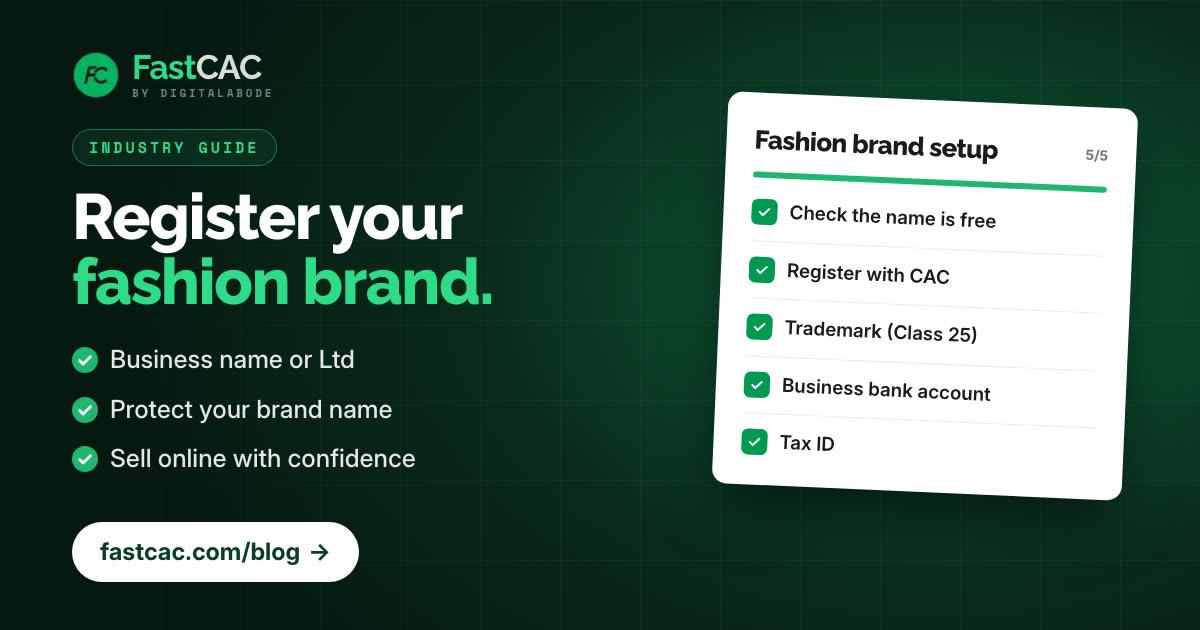
Plenty of Nigerian fashion brands start the same way: a sewing machine, an Instagram page and a few loyal customers. That is fine for the first orders. But once you want a business bank account in your brand's name, card payments on your website, a uniform contract or a stockist, the first question is usually: is this business registered?
This guide covers what designers, tailors and clothing brands need to know: which structure to pick, how CAC registration and trademarks protect your name differently, how to describe the business, and what happens after you are registered. FastCAC is a registration platform, not a CAC agent, and is not affiliated with CAC.
1. Business Name or Ltd?
There is no special licence for running a fashion business, so the choice comes down to how you work and where you want the brand to go.
Business Name
Good for a solo tailor, a bespoke designer working from a studio, or a small ready-to-wear brand testing the market. Quicker and cheaper, with lighter yearly filing. The trade-off: you are personally liable for the business's debts, and it is harder to bring in partners or investors.
Limited Company (Ltd)
Better for a brand with co-founders, plans to raise money, a factory or production unit with staff, wholesale or corporate supply contracts, or export ambitions. The company is a separate legal person, so it can own equipment and sign contracts in its own name, and your personal assets are protected.
Many brands start as a business name and convert later. If you are unsure, read Business Name vs Limited Company. Official fees for both are in our CAC registration cost guide.
2. Naming and Protecting Your Brand
In fashion, the name is the product. It goes on labels, swing tags, packaging and your handle, so get it right before you print anything.
- Check availability first. CAC will reject a name that is identical or too similar to one already registered. Use the free CAC name checker, and check that the Instagram handle and domain are free too.
- Stay clear of famous labels. Names that copy or play on well-known fashion houses invite rejection and, later, legal trouble.
- Think beyond one product. "Ada's Agbada" is hard to stretch into womenswear or bags. A broader name gives the brand room to grow. The business name generator can help you brainstorm.
CAC registration is not a trademark
Registering with CAC records your business and stops anyone else registering the same business name. It does not give you the exclusive right to use that name or your logo on clothing. That comes from registering a trademark with the Trademarks Registry, in the class that covers your goods (clothing, footwear and headwear sit in Class 25 of the international classification). If you are building a brand you intend to scale, do both. Our guide to business registration vs trademark explains the difference in detail.
3. Describing Your Business
The nature of business you declare should describe what you actually do, broadly enough to cover where you are heading. Some examples:
- Tailoring / bespoke: "Fashion design, tailoring and sewing of garments for men and women".
- Ready-to-wear brand: "Design, production and sale of clothing, footwear and fashion accessories".
- Retail / boutique: "Retail and online sale of clothing, fabrics and fashion accessories".
- Fabrics and aso-ebi: "Sale and distribution of fabrics, textiles and ready-made garments".
Choose the closest business category on the CAC portal, then use the description to fill in the detail. If you also run training (fashion school or apprenticeship) or plan to export, mention that as well. For a company, these activities go into the objects in your MEMART.
4. Selling Online and Getting Paid
Instagram, TikTok, WhatsApp and online marketplaces are where most Nigerian fashion sales start. You do not need a CAC certificate to open an Instagram page, but registration starts to matter quickly:
- ✓A bank account in your brand's name.
Customers are more comfortable paying "Ada Studio" than a personal account. Banks ask for your CAC documents to open a business or corporate account. See our corporate banking guide.
- ✓Payment gateways and storefronts.
Payment processors and online store platforms generally ask for business registration documents before they will fully activate a business account in your brand's name. Unregistered accounts are often limited.
- ✓Corporate and bulk orders.
Uniform contracts, corporate gifting, hotel and school orders usually require vendor registration with a CAC certificate, a Tax ID and a business bank account. Big buyers rarely pay individuals.
- ✓Stockists and marketplaces.
Concept stores and many marketplaces want to know they are dealing with a real business before taking your stock or listing it.
5. Step-by-Step Registration
- Pick and check your name. Have two or three options ready.
- Choose your structure. Business name or Ltd, based on section 1.
- Prepare your details. Your NIN slip (keep the paper slip handy), passport photo, signature, phone, email and business address (your studio or shop, or a home address if you work from home). For a company, details of directors and shareholders too.
- Describe the business using wording like the examples above.
- Submit and pay the official fee. The CAC reviews and approves the application.
- Download your certificate, then open your business account and update your payment and store accounts.
Full document list: CAC registration requirements.
Register your brand without an agent
Business name registration is live on FastCAC now; limited company registration is coming soon. FastCAC checks your name and details against the CAC rules before you submit, then tracks your application until your certificate arrives.
Start Registration6. If You Plan to Export
Selling the odd piece to a customer abroad through DHL or a shipping agent is common and simple. Exporting as a business, to stockists or distributors abroad, is a bigger step.
Formal exporters register with the Nigerian Export Promotion Council (NEPC). NEPC's published document checklists are written for limited companies (Certificate of Incorporation and MEMART), co-operatives and organisations, not business names, so if export is part of the plan, an Ltd is the safer structure. Trade preference schemes such as the US African Growth and Opportunity Act (AGOA) have been on short-term renewals recently, so check their current status with NEPC before building a plan around them.
7. Tax and Staying Compliant
Banks and corporate clients will ask for your tax number. Under the 2025 tax reforms, the old TIN is being replaced by a unified Tax ID managed by the Nigeria Revenue Service (NRS, formerly FIRS): your NIN as an individual, and your CAC number for a registered business. See how to get your Tax ID after CAC registration.
- Business name: profit is taxed as the owner's personal income.
- Limited company: under the tax laws in force from January 2026, a small company is exempt from company income tax, but it still has to file returns. The gazetted Act sets the turnover limit at ₦50 million, though officials have said ₦100 million was intended, so check the current figure and ask a tax adviser whether you qualify.
- Keep records of sales, fabric and materials, tailors' pay and delivery costs from day one. It makes tax filing, loans and investor conversations much easier.
- File your CAC annual returns every year, whether you trade as a business name or a company.
See our post-registration compliance guide for everything you need to do after your certificate arrives.
Fashion Business Registration FAQs
Do I need to register my fashion business with CAC?
If you trade under any name other than your own full name, the law expects you to register it. In practice you will also need a CAC registration to open a business bank account, activate a business account with most payment processors, and supply corporate clients.
Business name or limited company for a clothing brand?
A business name suits a solo designer or tailor starting out. A limited company is better if you have co-founders, want investors, plan to produce at scale, supply big corporate or government contracts, or want to keep personal assets separate from business debts.
Does registering with CAC protect my brand name?
Only partly. CAC registration stops another business from registering the identical name, but it does not give you exclusive rights to use the name or logo on clothing. That protection comes from a trademark, registered separately with the Trademarks Registry.
Can I register my fashion brand without an agent?
Yes. You can register online yourself. FastCAC is a registration platform, not a CAC agent: business name registration is live now and limited company registration is coming soon. It checks your details before submission and tracks your application until the certificate is issued.
I sell only on Instagram. Do I still need to register?
Selling online does not exempt you. Registration is what lets you open a business account in your brand name, take card payments under that name, and look credible to customers who are deciding whether to send money to an Instagram page.
Can I add a new line, like perfume or bags, later?
Yes, but describe your business broadly enough at the start (for example fashion design, clothing and accessories) so that related products fit. If you move into something quite different, you may need to update your registration.

FastCAC Legal Team
Our team helps creative founders and small brands get registered properly with CAC, without needing an agent.