Everything You Need to Know About CAC Registration
The definitive 2026 guide to legalizing your business in Nigeria under the latest CAMA regulations.

As of March 2026, registering with the Corporate Affairs Commission (CAC) is no longer just a "good idea"—it's a critical legal requirement for anyone doing business in Nigeria. With the recent enforcement of registration for all PoS operators and the full implementation of the Companies and Allied Matters Act (CAMA) 2020, the landscape has changed.
1. CAMA 2020 Updates
The CAMA 2020 has simplified business for small entrepreneurs. Key features include:
- Single-Member Companies: You can now register a private company with just one person.
- PSC Disclosure: Mandatory disclosure of Persons with Significant Control (PSC) ensures transparency.
- Common Seals: No longer mandatory for companies, simplifying document execution.
2. 2026 Requirements
Biometric Verification
NIN is now mandatory for all directors and proprietors.
Digital Address
A verifiable physical address with digital mapping details.
Note: Upon registration, your Tax Identification Number (TIN) is now automatically generated and included on your certificate.
3. Current Fee Schedule
Effective late 2025, the CAC updated its fee structure. At FastCAC, we've bundled these government fees into flat, all-inclusive packages. A standard Business Name registration now starts at ₦50,000 (all-in), while full Private Limited Companies (Ltd) start at ₦100,000.
4. Compliance & the PoS Mandate
The Jan 1, 2026 deadline for all fintech agents and PoS operators to register is now in full force. Operating without a CAC certificate can lead to account freezes and legal penalties.
Don't Forget Annual Returns!
Registration is just the start. Every registered business must file Annual Returns (starting at ₦5,000/year for business names) to maintain an "Active" status on the CAC public search portal.
Conclusion
Don't leave your business in the shadows. Get registered today and start building on a solid legal foundation.
Further Reading
Explore these related guides to build a complete compliance strategy:
Business Name vs. Limited Company
Which structure is right for your growth ambitions?
How Much is CAC Registration in 2026?
Full breakdown of official fees for BN, Ltd, and NGOs.
Annual Returns 101
Keep your business Active after registration.
The Single Director Company
How CAMA 2020 changed solo entrepreneurship.
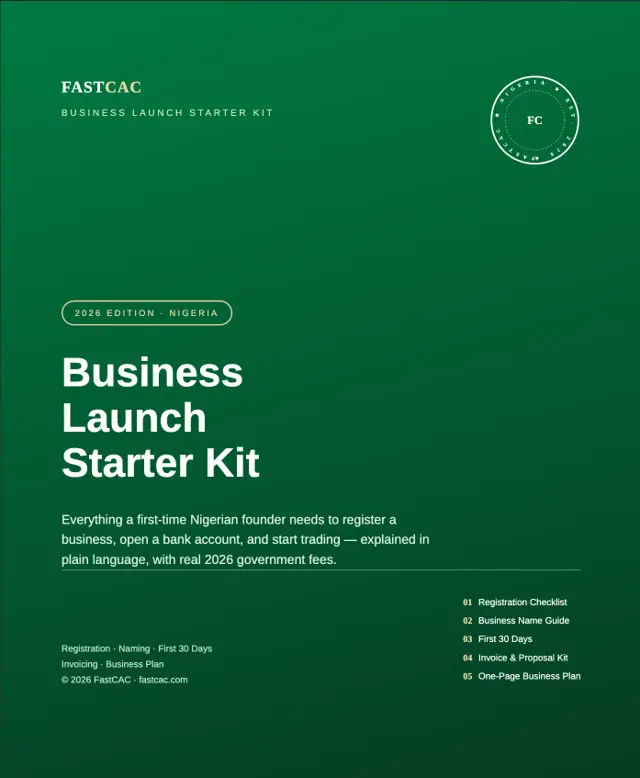
The 2026 Business Launch Starter Kit
From CAC Registration to your first 30 days—get the exact guides and templates you need to launch without the stress.
Confused by TIN, VAT, and government fees? Don't let paperwork delay your business. This kit explains everything in simple, everyday English so you can avoid costly mistakes, open your corporate account, and bill clients like a pro. No lawyer needed.
What You Get In The Kit:

FastCAC Legal Team
Our legal team specializes in Nigerian corporate law and has helped thousands of businesses register with the CAC efficiently.