Group vs. Holding Company
Ready to build an empire? Understanding the best structure for managing multiple businesses under one parent.

As a founder, success often leads to diversification. You might start in retail, then move into logistics, and eventually finance. Managing these separate businesses under one "Umbrella" is where the choice between a Holding Companyand a Group of Companies becomes critical. In Nigeria, the CAC strictly regulates these terms.
Many founders are surprised to learn that you cannot simply call your company "XYZ Holdings Limited" or "XYZ Group of Companies" without meeting specific CAC requirements first. These are restricted business name descriptors in Nigeria—using them without the requisite structure can get your application rejected or, worse, cause regulatory complications after registration.
1. The Holding Company (HoldCo)
A Holding Company is a parent entity created primarily to own controlling shares (more than 50%) in other companies (subsidiaries). It usually doesn't produce goods or services itself.
CAC Requirements:
- • At least two (2) existing subsidiary companies already registered with CAC.
- • The parent must own more than 50% shares in each.
- • Formal consent from the Registrar General to use the word "Holding".
2. The Group of Companies
A Group of Companies is an umbrella structure for three or more associated companies that share common shareholders or ownership. It acts as a collective brand identity.
Key Requirements:
You must have at least three (3) or more associated companies. The share capital of the parent must not be less than the highest share capital among the associated companies.
3. Major Differences at a Glance
| Feature | Holding Company | Group of Companies |
|---|---|---|
| Min. Entities | 2 Subsidiaries | 3 Associates |
| Ownership | Parent owns the shares | Common shareholders |
| Main Focus | Management & Investment | Consolidation & Branding |
4. Which One Should You Choose?
Choose Holding If:
You want to separate liability cleanly between departments or are preparing for a stock market listing / VC investment.
Choose Group If:
You have 3+ separate businesses and want to build a unified, powerful conglomerate brand across different markets.
5. How to Register Either Structure
Both structures require that the subsidiary companies or associated companies are already registered Ltd companies with the CAC before the parent entity can use the restricted terms "Holding" or "Group."
- Register your subsidiary Ltd companies individually with the CAC.
- Register the parent Ltd company with a provisional name (e.g., "XYZ Investments Limited").
- Apply to the CAC Registrar General for consent to use "Holding" or "Group" in the name, attaching evidence of the subsidiary registrations and ownership structure.
- Execute a Change of Name on the parent company after consent is granted.
Ensure each subsidiary company keeps its annual returns up to date throughout this process—the CAC will verify the active status of all entities during the consent review.
Conclusion
Structuring your business empire correctly early can save you millions in future tax liabilities and legal restructurings. Whether you go with a "Holding" or a "Group" structure, ensuring each entity is fully compliant with CAC annual returns is the foundation of your long-term success. FastCAC specializes in multi-entity registrations—contact us to map out your corporate empire.
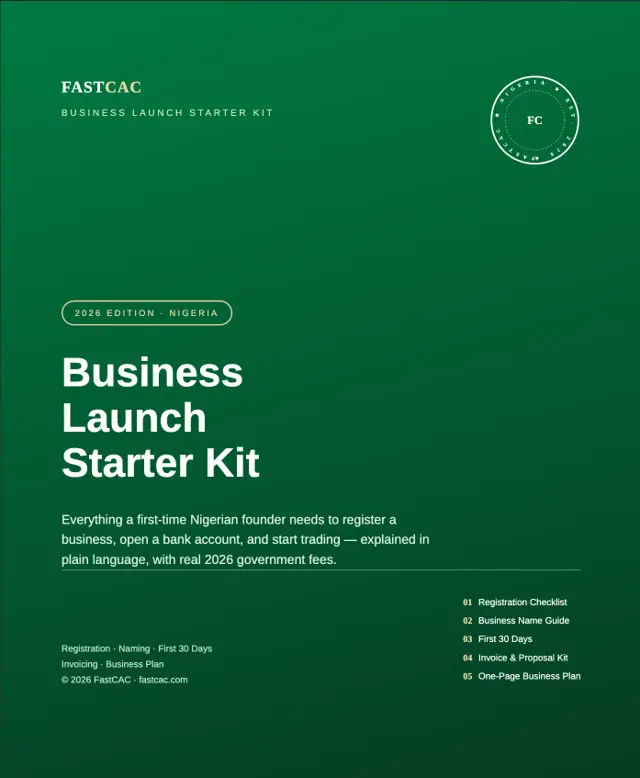
The 2026 Business Launch Starter Kit
From CAC Registration to your first 30 days—get the exact guides and templates you need to launch without the stress.
Confused by TIN, VAT, and government fees? Don't let paperwork delay your business. This kit explains everything in simple, everyday English so you can avoid costly mistakes, open your corporate account, and bill clients like a pro. No lawyer needed.
What You Get In The Kit:

FastCAC Legal Team
Our experts write about how multi-industry founders can structure their parent entities to maximize tax efficiency and operational control.